Squishy Toy Safety Recalls: What Parents Should Check Before Buying
Cheap squishy and fidget toys are exactly the corner of the toy aisle where recalls happen: fast-moving trends, thin margins, anonymous importers. Before this site recommends anything, we run the check below — and this article shows you how to run it yourself in about five minutes.
The recall record: what actually happened
We compiled this timeline on July 6, 2026, directly from CPSC recall notices and primary regulatory sources. It is not exhaustive of all toy recalls — it is every major action we found that touches the squishy/fidget/sensory category specifically.
| When | Product | What went wrong |
|---|---|---|
| May 2026 | Orb Funkee squeeze toys (~120,000 units, Walmart & Ollie’s) | The sand filling could contain fibrous tremolite — a form of asbestos. Remedy: bag it, photograph it, refund. |
| 2026 | Kori Gey “water elf” jelly toy kits (sold on Amazon) | Craft kits forming squishy jelly figures shipped with an accessible button cell battery compartment — an ingestion hazard that violates the mandatory toy standard. |
| 2024 | Shawshank LEDz squeeze plush balls (Ace Hardware) | The glitter-liquid pouch inside could rupture and splash a child’s face and eyes. |
| Sept 2023 | Chuckle & Roar Ultimate Water Beads kits (~52,000 kits, Target) | Water beads swell after swallowing. One infant death reported (2023) and one infant needing surgery for intestinal obstruction (2022). CPSC now runs a dedicated Water Beads Information Center. |
| Nov 2017 | Fidget Wild Premium Spinners (Target) | US PIRG lab tests found lead at 33,000 ppm in the “Brass” model — 330 times the 100 ppm federal toy limit. Target pulled them; no formal CPSC recall, because the packaging said “14+”, classifying them as “general use products” rather than toys. |
| Jun 2018 | Squishies at Danish retailers | Denmark’s environmental agency tested 12 squishies: all 12 released harmful chemicals (dimethylformamide, styrene, toluene). Major Danish chains pulled the category. Not a US action — but the same products ship worldwide. |
The pattern: it’s rarely the squish itself
Reading these side by side, four patterns stand out — and they are the basis of our checklist:
- The danger hides in the filling, not the foam. Asbestos-tainted sand, button batteries, rupturing liquid pouches. A one-piece solid squishy has fewer failure modes than anything filled, wired or lit up.
- “Sold at a big retailer” is not a safety guarantee. Target, Walmart and Ace Hardware all appear above. The retailer’s name on the shelf does not mean the importer tested the product.
- The chemistry problem is real but invisible. Denmark found harmful volatiles in 12 out of 12 squishies tested. You cannot lab-test a toy at home — but a strong chemical smell out of the package is the one signal you can detect. Return it; don’t air it out.
- Watch the age-label loophole. The lead-contaminated fidget spinners dodged toy regulations because the package said “14+” — while being sold in the toy aisle. An age label that seems too high for the product is a compliance dodge, not a safety feature.
How to run the check yourself (5 minutes)
We ran this exact check while writing this article — the screenshots below are from our own session on July 7, 2026.
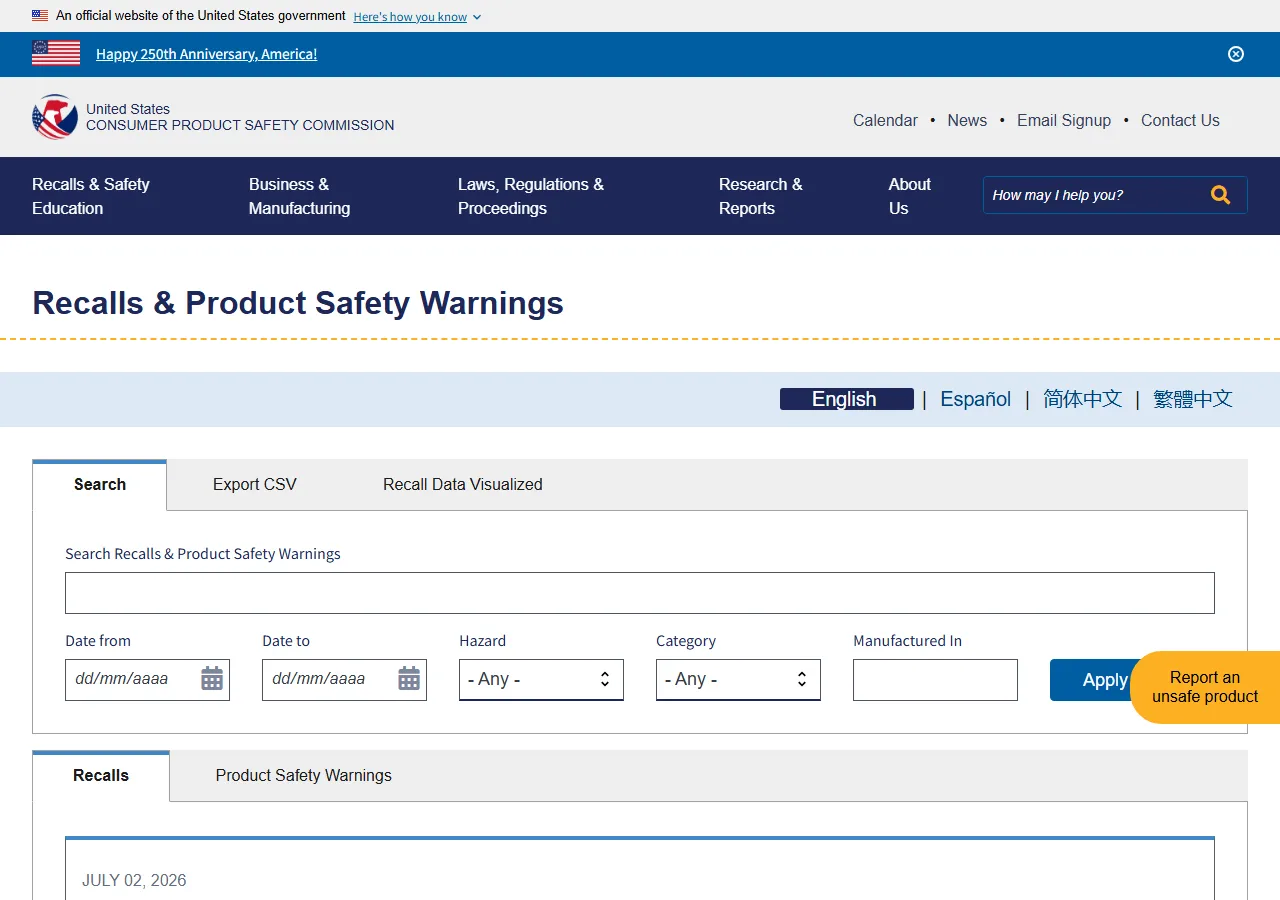
Step 1. Go to CPSC.gov/Recalls. You’ll land on the search form:
Step 2. Type the product type — brand too if you have one. We searched “squeeze toy” and hit Apply. Note the first result: a popping toy recalled for a choking hazard, with injuries already reported:
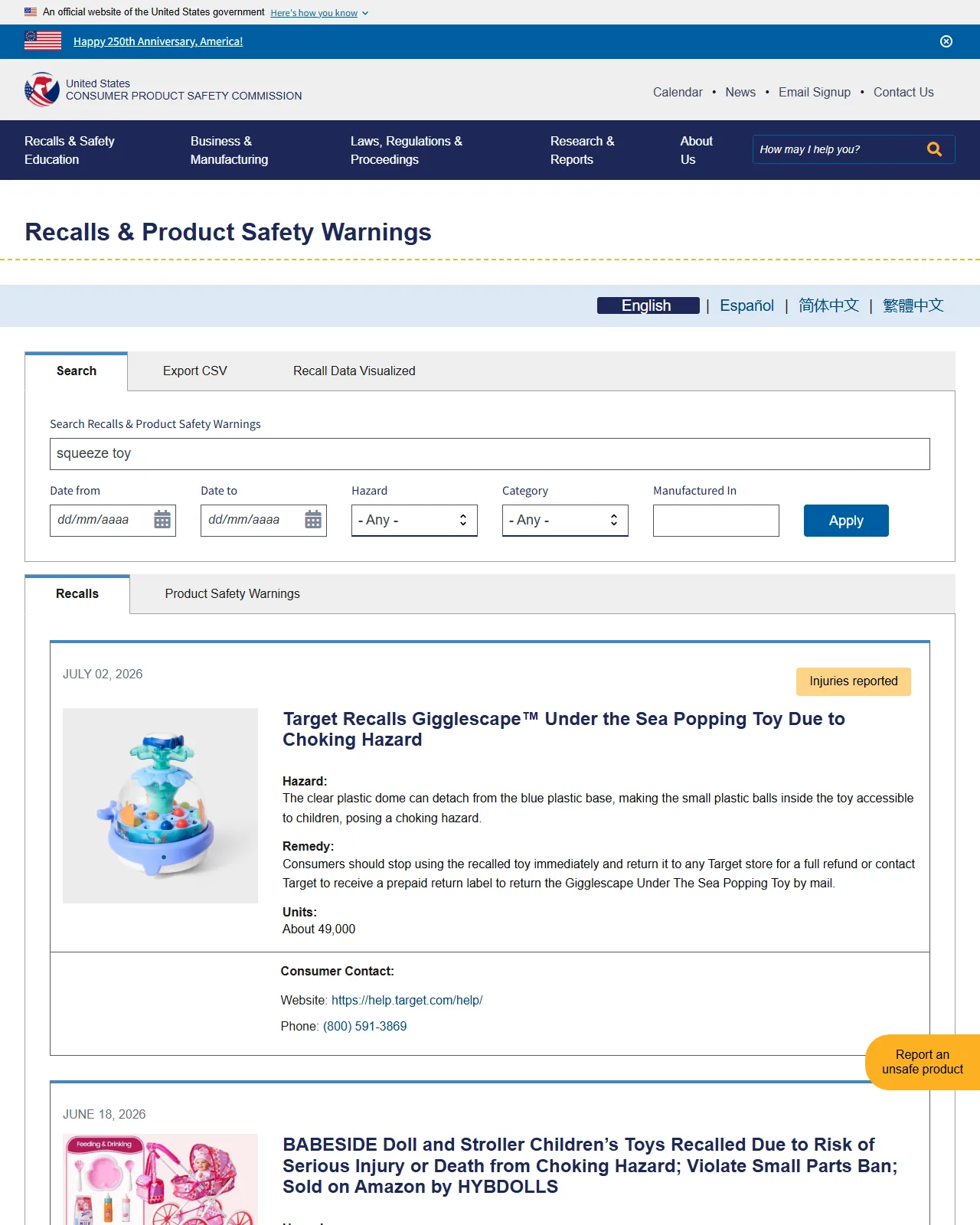
No brand on the listing? Search the product type plus the seller name shown on the marketplace listing — recalls of Amazon-sold products name the seller (see the Kori Gey notice above, “Sold on Amazon by Qaniy”).
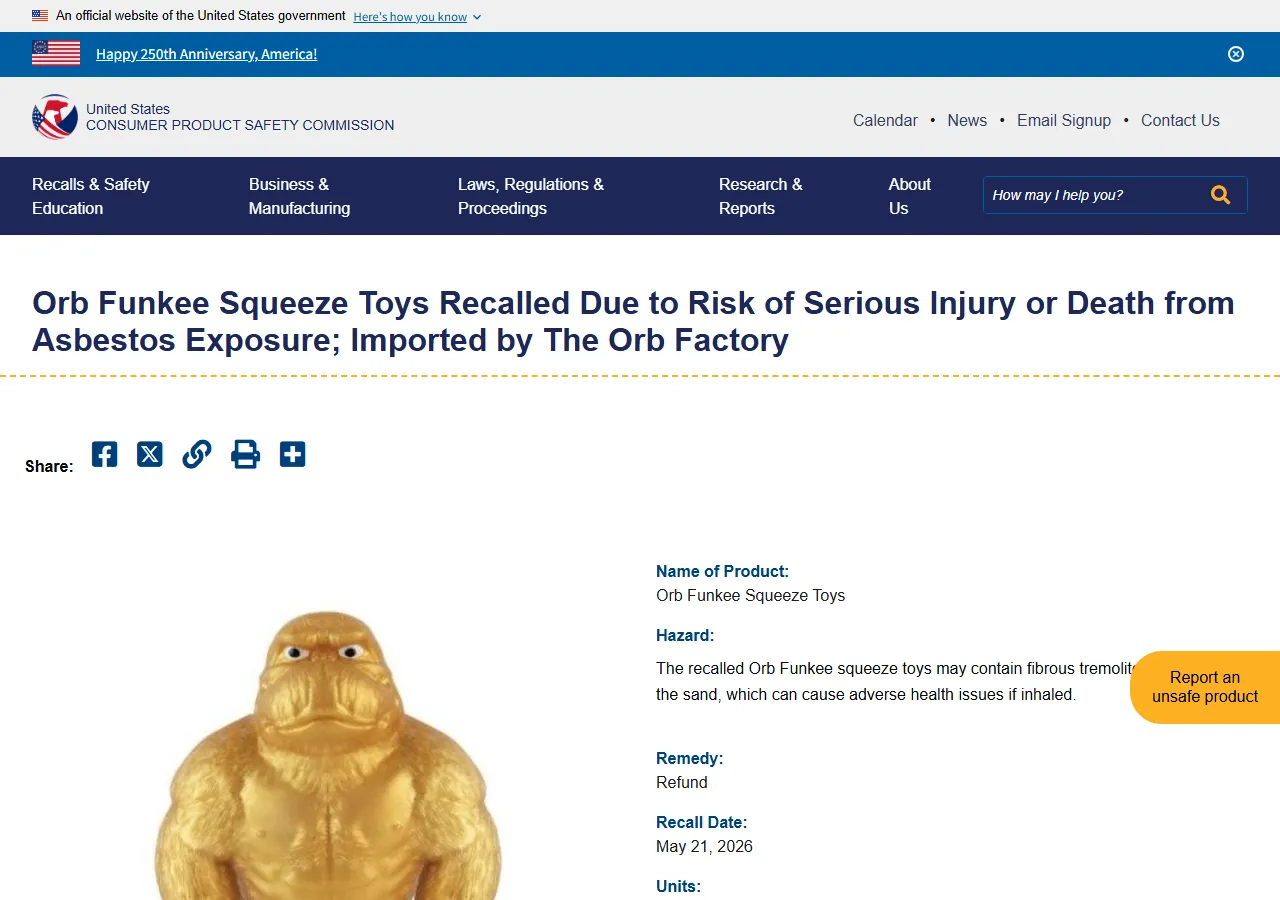
Step 3. Open any hit and read the hazard and remedy. This is the Orb Funkee notice from our timeline — recall date, hazard and refund instructions are all on one page:
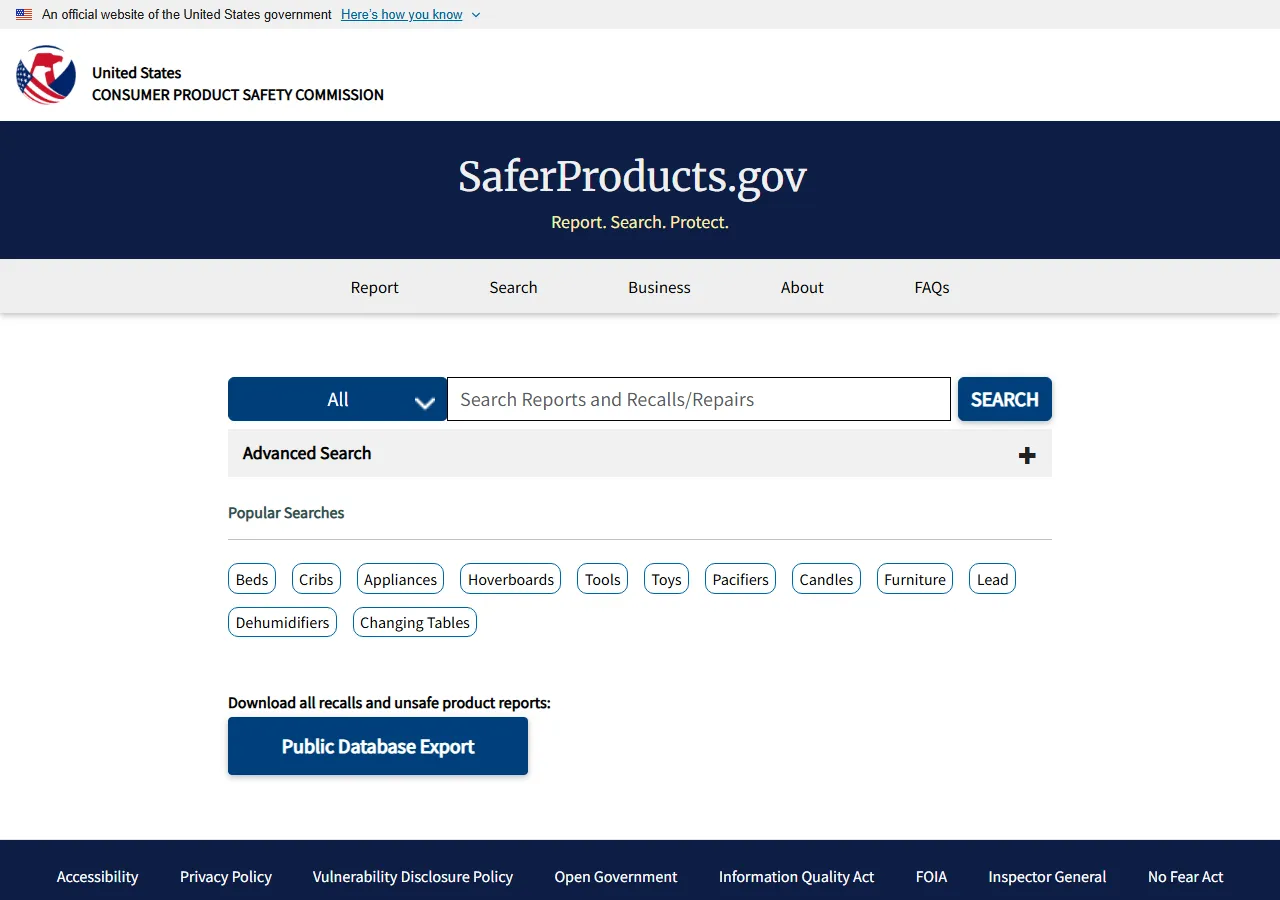
Step 4. Cross-check SaferProducts.gov for incident reports that haven’t become recalls yet — note “Toys” is already one of its most popular searches:
Step 5. Check the listing photos for an age grade and a tracking label. No age grade anywhere is a walk-away sign.
Before you buy: the 60-second checklist
- Solid, one-piece construction — no sand, gel beads, batteries or liquid pouches for young kids.
- Age grade printed and consistent with the product (suspicious “14+” on an obvious kids’ toy = loophole flag).
- Brand or importer name you can actually find and search.
- No strong chemical smell on arrival (return it if there is).
- Two-minute search on CPSC.gov/Recalls before checkout.
We re-check this timeline periodically; if a new recall hits this category, this article gets updated with the date noted at the top.
Frequently Asked Questions
How do I check if a toy has been recalled?
Search the product name and brand at CPSC.gov/Recalls, the US government's recall database, and check SaferProducts.gov for incident reports. It takes about five minutes. For unbranded imports, search the product type ('squeeze toy', 'water beads') plus the seller name from the listing instead.
Have squishy toys ever been recalled?
Yes. In May 2026, about 120,000 Orb Funkee squeeze toys were recalled because the sand inside could contain asbestos. Earlier actions include squeeze balls with rupturing liquid pouches (2024), water bead kits linked to an infant death (2023), and lead findings in fidget spinners (2017).
Are squishies banned in Europe?
Not EU-wide, but in 2018 Denmark's environmental agency tested 12 squishies and found harmful chemicals — including dimethylformamide, styrene and toluene — in all 12. Major Danish retailers pulled squishies from shelves. US rules differ, but the finding is why we treat strong chemical smells as a return-it red flag.